🏔️ Earth (토, to) is the energy of stability, trust, and care — the solid ground that holds everything up. In your Saju chart, Earth shapes how you nurture, support, and create security. How much you carry — a mountain, a field, or thin soil — reveals where your steadiness runs deep and where it needs building.
🌍 What Earth really means in Saju
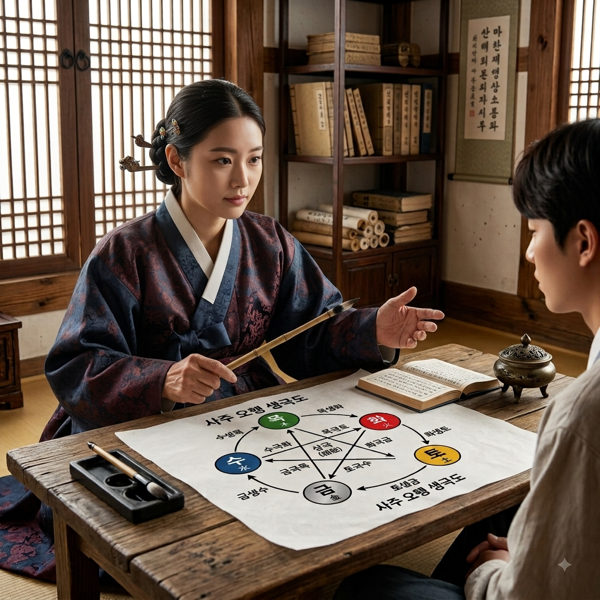
Earth sits at the center of the Five Elements (오행) — the transitional energy between seasons, the ground beneath all growth. It represents late summer, the harvest, the moment of gathering and digesting. Its deeper theme is holding: the instinct to nurture, protect, and keep things stable. In the elemental cycle, Earth is created by Fire (ash builds soil) and generates Metal (ore forms in the ground), while it's broken up by Wood (roots split earth) and dams Water. Earth is the quiet engine of trust — the element that makes people feel safe.
🏔️ Earth asks for nothing and gives constantly — but ground that never shifts can harden into a resistance to change.

🌾 무 vs 기 — the mountain and the field
Earth comes in two textures. Yang Earth (무, mu) is the mountain — immovable, dependable, protective. Mu people are the steady presence others lean on in a crisis; they don't flinch, but they can be stubborn and slow to move. Yin Earth (기, gi) is cultivated field soil — soft, fertile, accommodating, endlessly giving. Gi people nurture quietly and adapt to what's needed, though they can over-give and lose themselves in others' needs. The mountain shelters; the field feeds.
🤝 The Earth personality
Strong-Earth people are usually loyal, patient, and deeply reliable. They're the ones others rest on — unshaken under pressure, thoughtful in their care, genuinely invested in the people around them. In love, Earth is steady and devoted, building relationships slowly and for the long haul; the risk is worrying too much or over-protecting a partner. At work, Earth excels where trust, consistency, and follow-through matter — the person who quietly holds the whole team together. They prefer stability to flash and build things that last.
Best-Fit Careers
⚡ When you have too much Earth
Excess Earth tends toward over-caution and possessiveness. The dependable steadiness hardens into stubbornness and resistance to change — worry that calcifies into control, care that becomes over-protection. Too much Earth can mean staying too long in what's comfortable: the same job, the same routines, the same worries circling. The classical loosening agent is Wood — new challenges, growth, and the willingness to let a little disruption in.
🏔️ Too much stability becomes stagnation. When steadiness turns into fear of movement, Earth needs a shake — invite the growth energy of Wood.
🌬️ When Earth is weak or missing
Little or no Earth can look like restlessness and difficulty feeling grounded — trouble settling, weak follow-through, or a sense of floating without an anchor. It can show up as instability in routines, finances, or relationships that never quite feel solid. Building Earth means creating foundations: reliable routines, dependable people, a physical space that feels like home, and the patience to let roots take hold. Small, repeated acts of consistency do more for missing Earth than any single big change.
🩺 Earth, the body, and the season
In traditional East Asian thought, Earth maps to late summer, the spleen and stomach, and the emotion of worry — the overthinking that spins when we can't feel settled. People balancing their charts often lean into Earth's grounding (warm food, yellow and brown, the center, time in nature) when they feel scattered. Treat this as cultural context and self-reflection, not medical guidance.
⚖️ How to balance Earth
If Earth is excessive, borrow from Wood 🌳 — new ventures, change, and a willingness to be shaken loose. If Earth is lacking, feed it: earthy yellows and browns, the center, warm nourishing meals 🍲, steady routines, and time on solid ground.
Do you have the steadiness of a mountain — or thin soil? Check your free Saju.
🧭 Explore the other elements



🔍 Which elements are in your Saju?
Your Earth level — and how it balances with the other four elements — comes straight from your birth chart.
FAQ
Is too much Earth bad?+
Not bad — it means deep loyalty and steadiness. Just watch for over-caution, worry, and resistance to change.
What does missing Earth mean?+
Usually a foundation to build: grounding, patience, and the security of dependable routines and relationships.
What's the difference between 무 (mu) and 기 (gi) Earth?+
무 is Yang Earth — the mountain: solid, protective, immovable. 기 is Yin Earth — the field: soft, fertile, and endlessly nurturing.
What color and direction belong to Earth?+
Yellow and brown, and the center. Late summer is its season.
What controls or drains Earth?+
Wood controls Earth (roots break the soil), and Metal drains it (Earth spends itself forming ore). Fire strengthens Earth.
This guide is for reflection and entertainment, not professional advice.