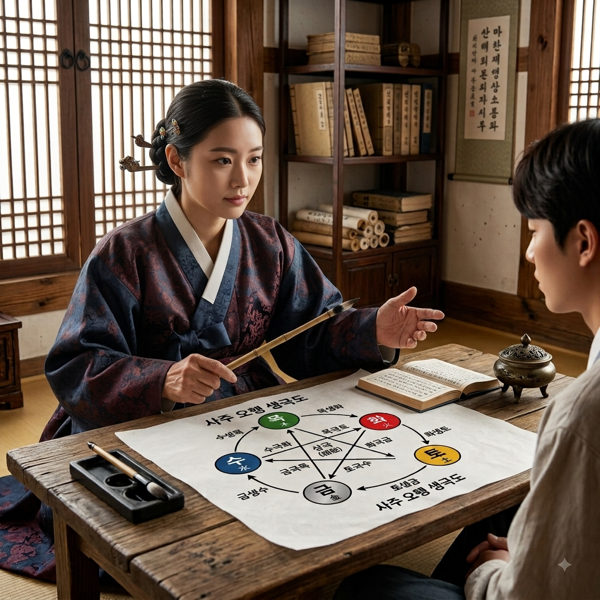
💧 Water (수, su) is the energy of wisdom, adaptability, and intuition — deep, flowing, always finding its way. In your Saju chart, Water shapes how you think, feel, and move through uncertainty. How much you carry — an ocean, a stream, or a dry bed — reveals where your depth runs strong and where it needs replenishing.
🌊 What Water really means in Saju
Water represents winter — the quiet season of rest, reflection, and stored potential. Its deeper drive is to understand: to look beneath the surface, sense what others miss, and move through life with fluid adaptability. In the elemental cycle, Water is created by Metal (metal collects and channels it) and generates Wood (rain grows the tree), while it's dammed by Earth and quenches Fire. Water never forces — it finds the path of least resistance and still reaches the sea.
🌊 Still water runs deep — but water with nowhere to flow grows stagnant and breeds doubt.
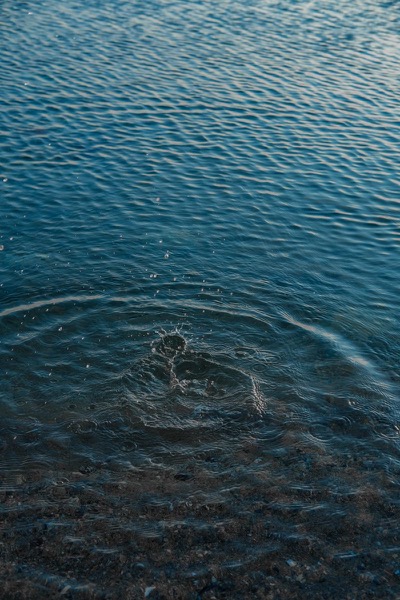
🌧️ 임 vs 계 — the ocean and the rain
Water comes in two forms. Yang Water (임, im) is the ocean, river, or great lake — vast, powerful, unstoppable in motion. Im people think big, adapt boldly, and carry a wide, generous depth, though they can be hard to read or emotionally overwhelming. Yin Water (계, gye) is rain, dew, or mist — gentle, subtle, quietly pervasive. Gye people are intuitive and sensitive, seeping into every corner of a situation, though they can drift or worry. The ocean moves worlds; the rain reaches everything.
🌙 The Water personality
Strong-Water people are usually perceptive, adaptable, and deeply thoughtful. They observe before they act, read situations with uncanny accuracy, and carry emotional depths that surprise anyone who mistook their calm for simplicity. In love, Water is intuitive and empathetic, attuned to a partner's unspoken moods — though it can retreat inward when overwhelmed. At work, Water excels wherever insight, research, and reading people matter. They're drawn to meaning, mystery, and the things beneath the obvious.
Best-Fit Careers
⚡ When you have too much Water
Excess Water tends toward overthinking and emotional overwhelm. The same depth that gives insight becomes a whirlpool of anxiety — indecision, fear, endless worry, and a habit of drowning in feeling rather than acting. Too much Water can mean living so far inside your own head that life passes by unlived. The classical containing agent is Earth — structure, routine, and grounded, practical action that gives the water banks to flow between.
🌊 Still water is deep, but stagnant water breeds doubt. When Water floods, even a small movement — one concrete step — breaks the cycle.
🏜️ When Water is weak or missing
Little or no Water can look like emotional shallowness or rigidity — difficulty empathizing, reluctance to go with the flow, or fear of the unknown. It can show up as black-and-white thinking or a discomfort with anything ambiguous. Building Water means deepening: slowing down, listening more, trusting intuition alongside logic, and letting yourself feel before you fix. People with missing Water often find that reflective practices — journaling, time near water, quiet — open a depth they didn't know they had.
🩺 Water, the body, and the season
In traditional East Asian thought, Water maps to winter, the kidneys and bladder, and the emotion of fear — the instinct that protects us but, in excess, becomes chronic anxiety. People balancing their charts often lean into Water's stillness (dark blue and black, the north, quiet reflection, rest) when they feel depleted. Take this as cultural context and self-reflection, not medical advice.
⚖️ How to balance Water
If Water is excessive, borrow from Earth 🏔️ — structure, routine, and practical action to give it banks. If Water is lacking, replenish it: deep blues and black, the north direction, quiet reflection 🌙, time near water, and journaling all nourish it.
Do you run deep as the ocean — or run dry? See your Water level in your free Saju.
🧭 Explore the other elements

🔍 Which elements are in your Saju?
Your Water level — and how it balances with the other four elements — comes straight from your birth chart.
FAQ
Is too much Water bad?+
Not bad — it means deep insight and adaptability. Just watch for overthinking, anxiety, and emotional overwhelm.
What does missing Water mean?+
Usually a depth to develop: intuition, empathy, and the ability to flow flexibly with change.
What's the difference between 임 (im) and 계 (gye) Water?+
임 is Yang Water — the ocean or river: vast, powerful, bold. 계 is Yin Water — rain or dew: gentle, subtle, and quietly pervasive.
What color and direction belong to Water?+
Black and dark blue, and the north. Winter is its season.
What controls or drains Water?+
Earth controls Water (it dams the flow), and Wood drains it (Water spends itself feeding the tree). Metal strengthens Water.
This guide is for reflection and entertainment, not professional advice.